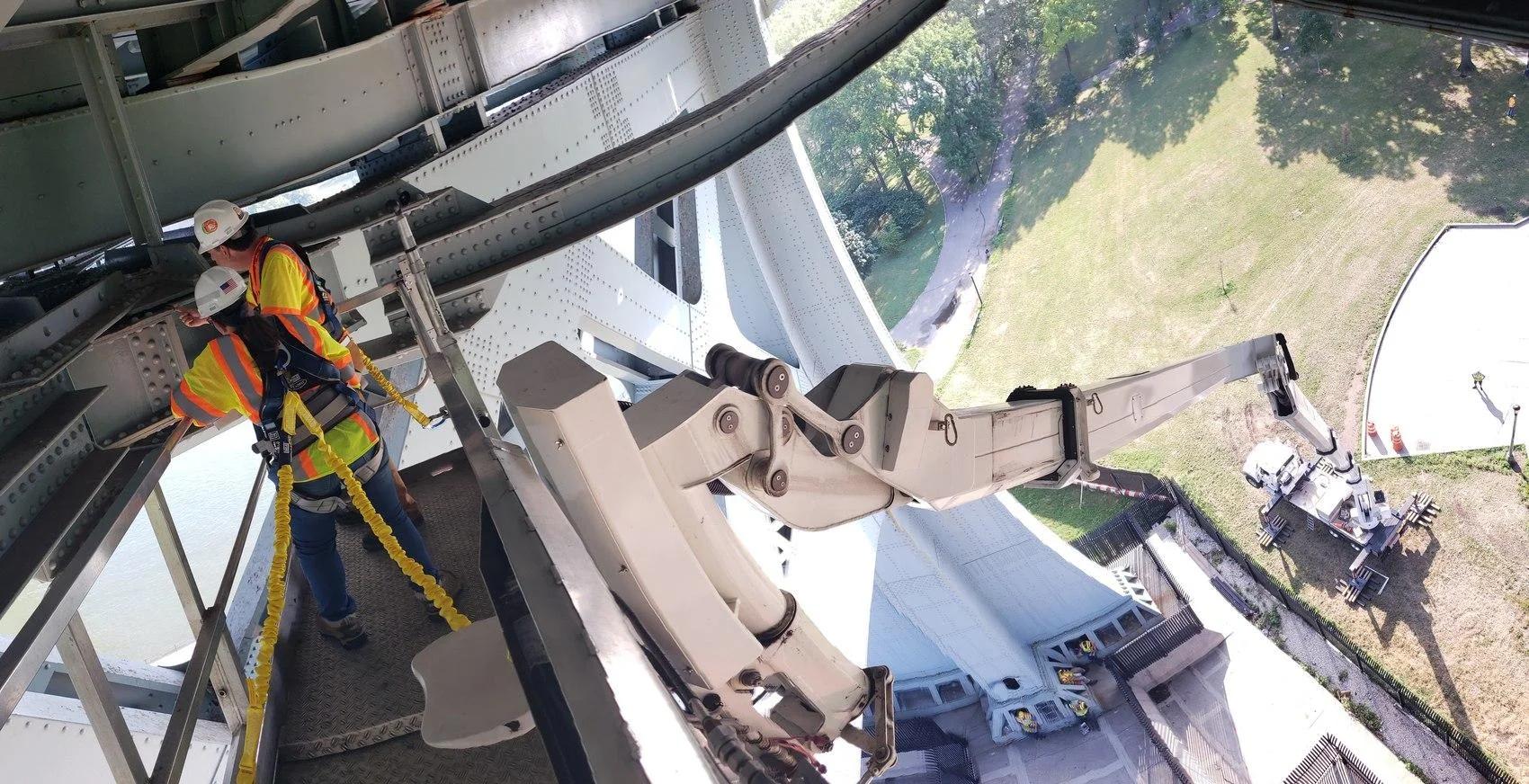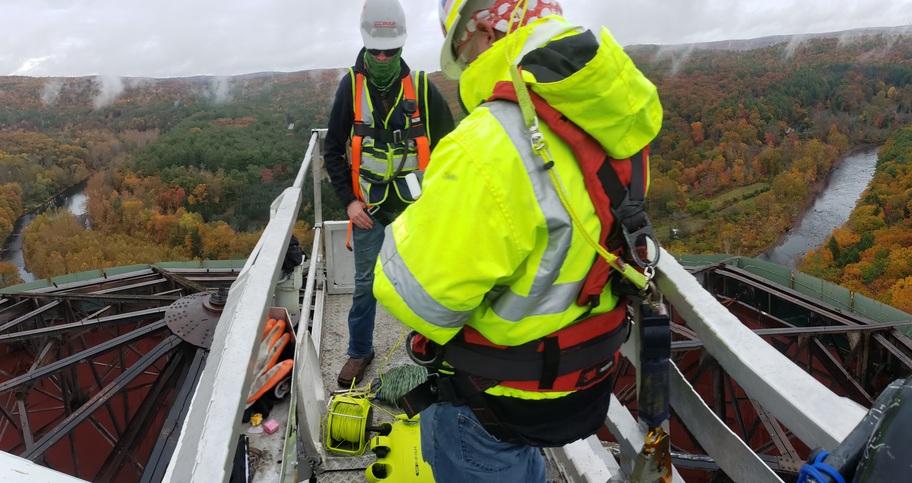
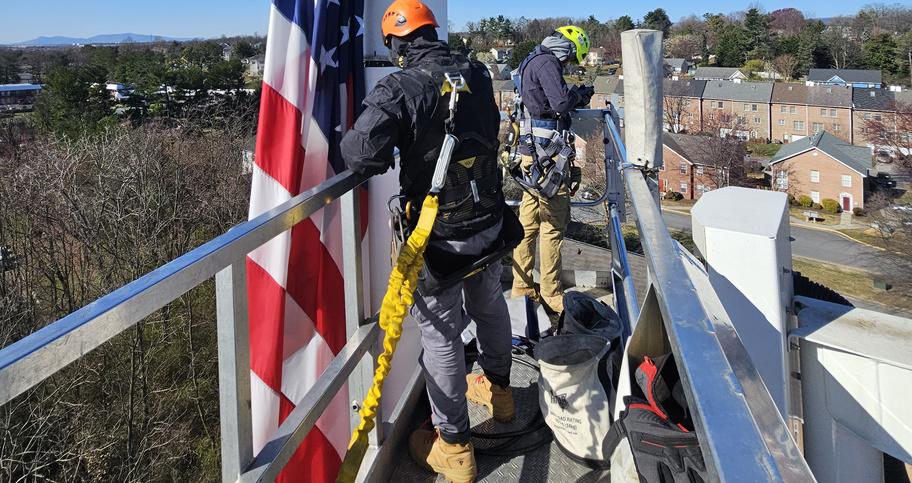
The 4 types at a glance
| System | What it does | Key OSHA numbers |
|---|---|---|
| 1. Fall arrest | Stops a worker who has already fallen: anchor, full body harness, lanyard or lifeline. | Free fall no more than 6 ft, arresting force no more than 1,800 lb, stop within 3.5 ft, anchor 5,000 lb per worker. |
| 2. Positioning | Holds a worker on a vertical surface so both hands are free. | Free fall no more than 2 ft, anchor twice the impact load or 3,000 lb, whichever is greater. |
| 3. Suspension | Lowers and holds a worker in a seat or harness, as in rope descent work on facades. | Rope descent no higher than 300 ft above grade unless no other means is feasible; a separate, independent fall arrest line for each worker. |
| 4. Rescue (retrieval) | Gets a fallen worker down after the system has caught them. | The employer must provide for prompt rescue, or make sure workers can rescue themselves. |
The figures come from OSHA 1926 Subpart M (construction) and 1910.27 and 1910.28 (general industry). The sections below explain each one.
Before personal gear: remove the hazard or guard it
Personal fall protection is the last line of defense, not the first. Safety professionals work in this order:
- Eliminate. Do the work from the ground or from a platform no one can fall from: prefabricate at grade, use extension tools, or bring a basket with rails to the work.
- Guard the edge (passive protection). Guardrails, hole covers and safety nets protect everyone without anyone having to clip in.
- Restrain. A harness and a short lanyard that physically stop the worker from reaching the edge, so a fall cannot start.
- Arrest. A system that catches the worker after a fall has started.
OSHA's numbers for the passive systems, under 1926.502:
- Guardrails: top rail at 42 inches, plus or minus 3 inches, able to withstand 200 lb outward or downward. Midrails must withstand 150 lb.
- Covers: must hold at least twice the weight of the workers, equipment and materials that may be on them, and must be secured.
- Safety nets: as close as practicable under the work, and never more than 30 feet below it.
- Toeboards: at least 3½ inches high, able to withstand 50 lb.
1. Fall arrest systems
A personal fall arrest system has three parts: an anchorage, a full body harness and a connector (shock-absorbing lanyard or self-retracting lifeline). Under OSHA 1926.502(d), when it stops a fall it must:
- limit free fall to 6 feet and keep the worker from hitting any lower level;
- limit the arresting force to 1,800 lb with a body harness;
- stop the worker within 3.5 feet of deceleration;
- hang from an anchor that holds 5,000 lb per worker attached, or one that keeps a safety factor of at least two as part of a complete system, under the supervision of a qualified person.
Since January 1, 1998, body belts are not allowed as part of a fall arrest system. A belt concentrates the force at the waist; a harness spreads it over the thighs, pelvis, chest and shoulders. Belts are still allowed for positioning and restraint.
Plan for clearance. A 6 ft lanyard, the shock absorber extending and the worker's own height add up quickly. If the lower level is closer than that, the worker hits it before the system stops them. Self-retracting lifelines that limit free fall to 2 feet help in tight spaces.
2. Positioning systems
Positioning lets a worker lean back in the harness against a pole, wall or rebar and work with both hands. OSHA 1926.502(e) limits free fall to 2 feet and requires an anchor that holds twice the potential impact load or 3,000 lb, whichever is greater. Positioning does not replace fall arrest: when the worker could still fall past the positioning line, a separate arrest system is needed.
3. Suspension systems
Suspension lowers and holds the worker: rope descent systems (a seat board on ropes) and similar setups used by window cleaners and facade crews. For rope descent in general industry, OSHA 1910.27 sets a limit of 300 feet above grade unless the employer shows that no other way to reach that height is feasible or safer. Each worker also needs a separate, independent fall arrest system, and every component except the seat board must be rated for 5,000 lb.
Suspended work also depends on anchors on the roof, rigging time and weather. See boom lift vs rope access and boom lift vs swing stage for when each one makes sense.
4. Rescue and retrieval
A harness that catches a worker is only half the job. Under OSHA 1926.502(d)(20), the employer must provide for prompt rescue, or make sure workers can rescue themselves. A worker left hanging in a harness is not safe yet: the straps restrict blood flow in the legs, and OSHA warns that this suspension trauma can become serious and even fatal, so rescue has to be fast.
A rescue plan answers four questions before anyone goes up:
- Who performs the rescue, and are they trained?
- What equipment do they use: a second lift, a rescue kit, a ladder that actually reaches?
- How long does it take to reach a fallen worker at the highest point of the job?
- Who calls 911, and how do responders get onto the site?
"Call the fire department" is not a plan on its own: it relies on response times you do not control.
Fall protection in a boom lift basket
Aerial lifts have their own rule, OSHA 1926.453(b)(2):
- A lanyard is attached to the boom or basket, never to an adjacent pole, structure or equipment.
- Workers stand firmly on the floor of the basket. No sitting or climbing on the rails, no planks or ladders inside the basket.
- The manufacturer's boom and basket load limits are never exceeded.
The rule text still says "body belt"; OSHA's own note under it points to Subpart M: a belt is acceptable for restraint, not for fall arrest. In practice, crews wear a full body harness with a short lanyard clipped to an anchor point in the basket, sized so they cannot be thrown over the rail.
That is why a boom lift moves most of the work up the hierarchy. Instead of walking an edge on a harness, the crew works inside a railed basket that is brought to the work. Our baskets have six harness anchor points, a load moment limiter and an overload alarm, and our certified operator stays at the controls. See how our lifts keep crews safe.
Common fall hazards these systems are meant for
Low heights. Falls from a few feet still injure and kill: the body has no time to react. Protection thresholds start at 4 feet in general industry and 6 feet in construction, but a rushed step off a low platform is where many injuries start.
Skylights and fragile roofs. OSHA treats a skylight as a hole. Anyone working more than 6 feet above the level below must be protected from falling through it by a cover, a guardrail around it or a personal fall arrest system. Weather and UV make skylight domes, fiber cement and old roof panels brittle, so a surface that looks solid may not hold a person. Mark fragile areas on the roof plan before the work starts.
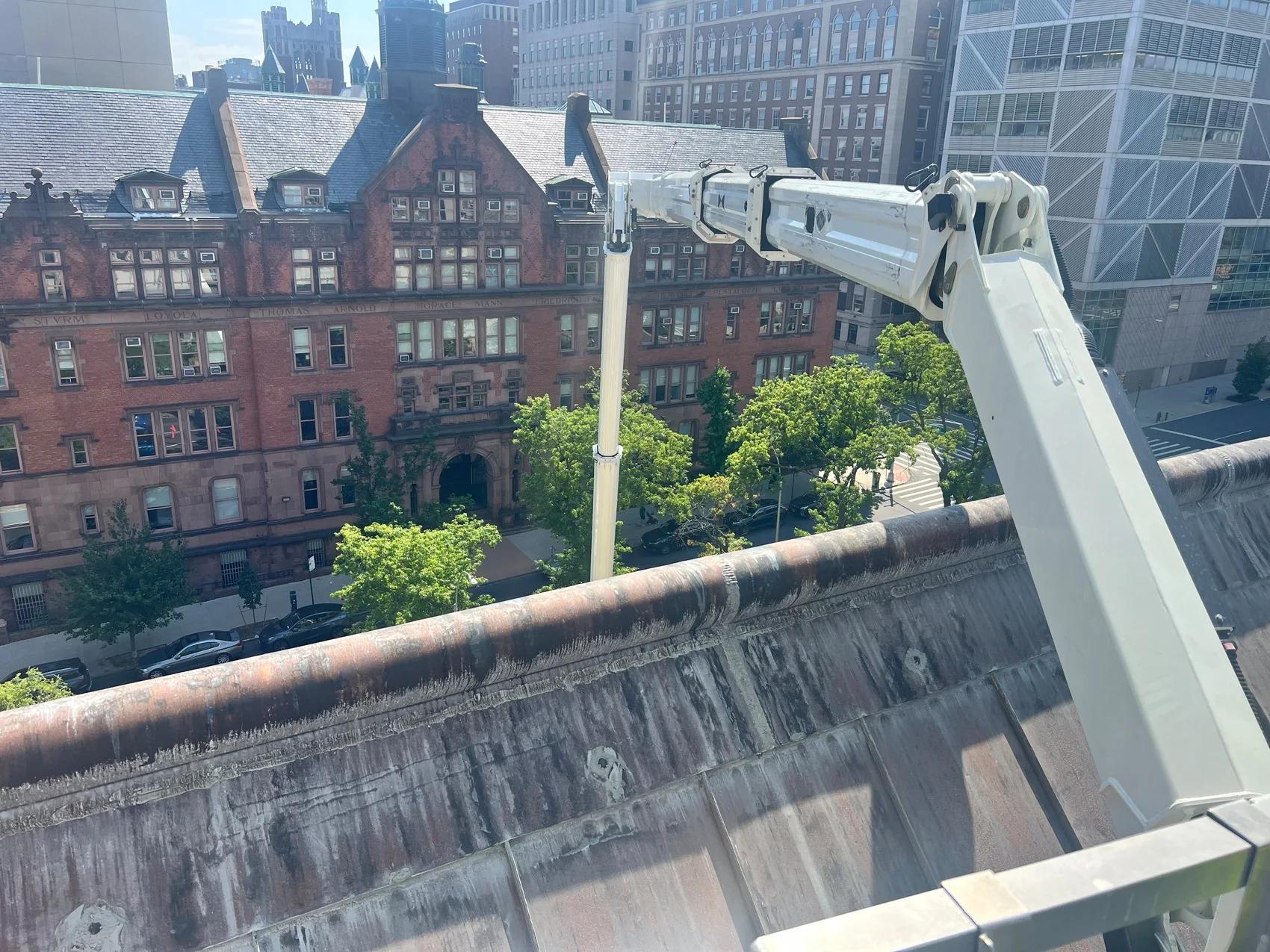
Steep roofs. On a steep roof with edges 6 feet or more above the level below, OSHA requires guardrails with toeboards, safety nets or personal fall arrest. On a historic building in New York, the chimneys sat in the middle of a 45° roof. Rope access and scaffolding were impractical, so technicians worked from our A‑250 basket, reaching up and over the roof with no scaffolding.
Ladders. Ladder falls usually start with the wrong ladder, the wrong angle or overreaching. OSHA 1926.1053: the side rails of a portable ladder extend at least 3 feet above the landing, and a leaning ladder is set about one foot out for every four feet of working length. Keep your belt buckle between the rails. For long or repeated work at height, a ladder is a way to get up, not a work platform.
Dropped objects. When workers are exposed to falling objects, OSHA 1926.501(c) requires hard hats plus one more measure: toeboards, screens or guardrails; a canopy; or a barricaded area below. At height, tether tools to the worker or the basket, keep them in bags, and agree on who moves where when two people share a basket. A tool dropped from 150 feet is a danger to everyone below, including people on the sidewalk.
Choosing fall protection equipment
- Match the system to the job: restraint where an edge can be kept out of reach, arrest where it cannot, positioning only together with arrest.
- Fit the harness to the worker and the connector to the clearance available below.
- Use rated anchors only: 5,000 lb per worker, or a safety factor of two under the supervision of a qualified person, never the guardrail or a pipe that looks strong.
- Inspect before each use. Any harness or lanyard that has arrested a fall is taken out of service until a competent person clears it.
- Train. OSHA 1926.503 requires fall protection training by a competent person for every worker exposed to fall hazards.
When to say no to working at height
Stop, or do not start, when:
- there is no rated anchor and no other way to protect the worker;
- there is no rescue plan, or it depends on equipment that is not on site;
- gear is damaged, the wrong size or missing an inspection;
- the weather is past the limits: thunder, wind over the lift's rating, ice (see working in the rain and working when it's windy);
- the worker is not trained for the system, or is sick or exhausted.
Saying no is cheaper than a fall. If the job can be done from a basket instead, rent a boom lift with an operator and the crew only has to clip in and work.
Fall protection checklist
- Can the work be done from the ground or from a railed basket instead?
- Edges, holes and skylights guarded or covered?
- Right system chosen: restraint, arrest, positioning or suspension?
- Anchors rated, clearance below checked?
- Harnesses, lanyards and lifelines inspected and fitted? (Use our free harness inspection checklist.)
- Tools tethered, area below barricaded, hard hats on?
- Rescue plan written, people and equipment on site?
- Everyone trained by a competent person?
Quick answers
What are the 4 types of fall protection?
Fall arrest, positioning, suspension and rescue (retrieval). OSHA also expects you to remove the hazard or use passive protection such as guardrails, covers and safety nets before relying on personal systems.
At what height is fall protection required?
6 feet in construction under OSHA 1926.501, and 4 feet in general industry under 1910.28. Other rules apply to scaffolds, ladders and aerial lifts.
What is the difference between fall arrest and fall restraint?
Fall restraint keeps the worker from reaching the edge, so a fall cannot start. Fall arrest stops a fall that has already started, with free fall limited to 6 feet.
How strong must a fall protection anchor be?
At least 5,000 lb per worker attached, or part of a system with a safety factor of at least two, under the supervision of a qualified person. Positioning anchors need twice the impact load or 3,000 lb, whichever is greater.
Do you need a harness in a boom lift?
Yes. OSHA 1926.453 requires a lanyard attached to the boom or basket. Crews wear a full body harness clipped to an anchor in the basket and never tie off to a nearby structure.
Can a body belt be used for fall arrest?
No. Since January 1, 1998, body belts are not allowed in personal fall arrest systems. They can still be used for positioning and restraint.