Three sub-cycles, set by the last digit of your tax block. Find yours, see what DOB wants in the report, and plan the close-up inspection before the window closes.
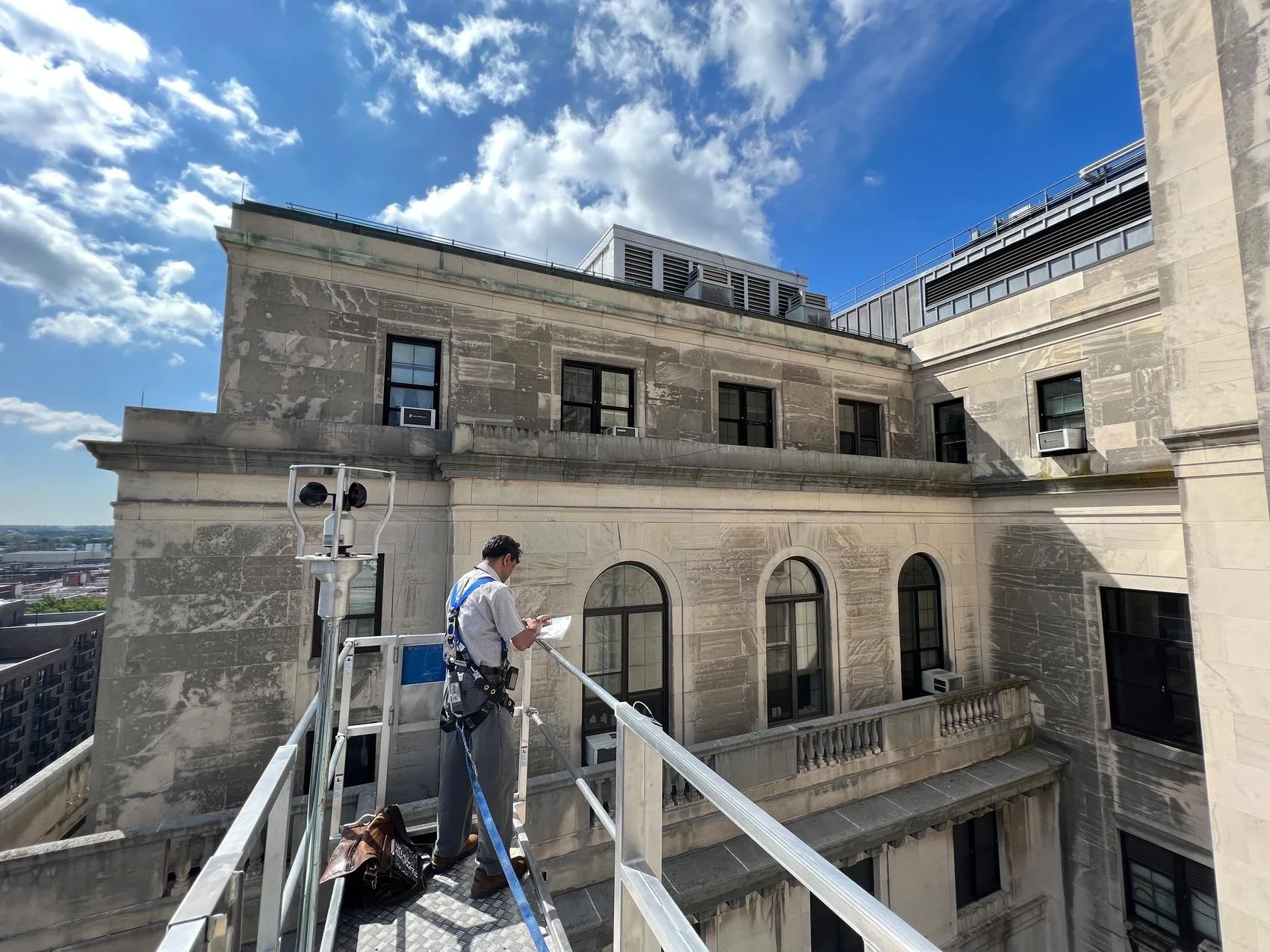
At least one close-up inspection for every 60 ft of facade facing a public street: 2 for 60 to 120 ft, 3 for 120 to 180 ft, and so on.
The close-up drops are spread along each elevation that fronts the public right of way, shown on the plot plan.
Each condition is described, classified and mapped on key plans and elevations, with labeled close-up photos.
The QEWI does a final physical examination of the building before filing. A drive-by is not accepted.
Call 311 (911 if the danger is immediate), notify the owner, put up protection and file a FISP-3 in DOB NOW.
Owner details on the filing must match the Department of Finance record, or DOB returns it as incomplete.
Source: NYC DOB, Facades and Local Law team, 1 RCNY 103-04 outreach (Fall 2022).
It depends on the last digit of your tax block number: 4, 5, 6 or 9 is 10A, 0, 7 or 8 is 10B, and 1, 2 or 3 is 10C. Type your address in our building lookup.
10A on February 21, 2027, 10B on February 21, 2028 and 10C on February 21, 2029. A report filed after the window closes is late.
A building joins FISP five years after its first Temporary Certificate of Occupancy (or the final CO if there was no TCO). The cutoffs are February 21, 2020 for 10A, 2021 for 10B and 2022 for 10C.
Protection goes up right away, usually a sidewalk shed, and stays until repairs are done and an amended report is accepted. An amended report can be filed at any time.
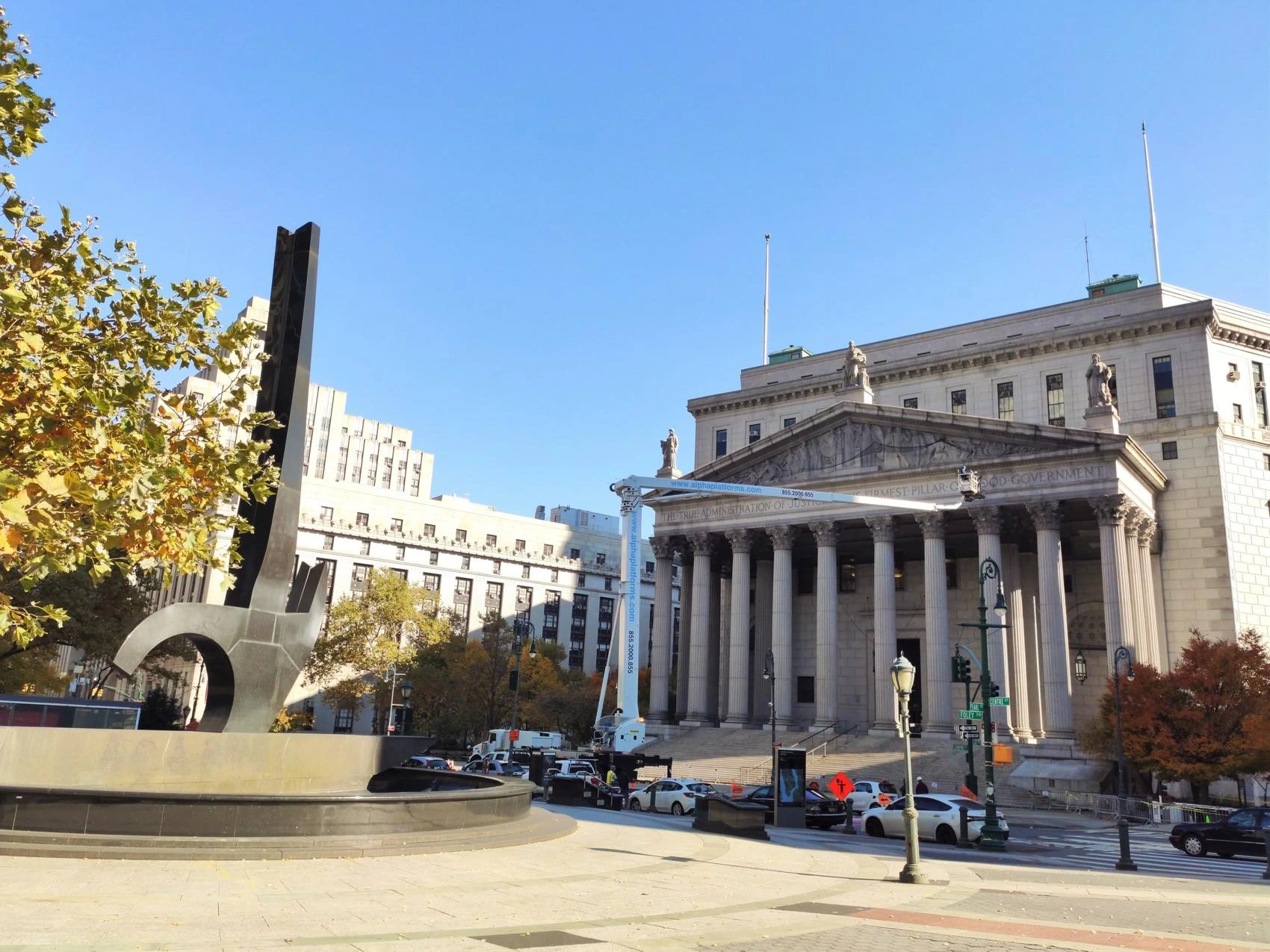
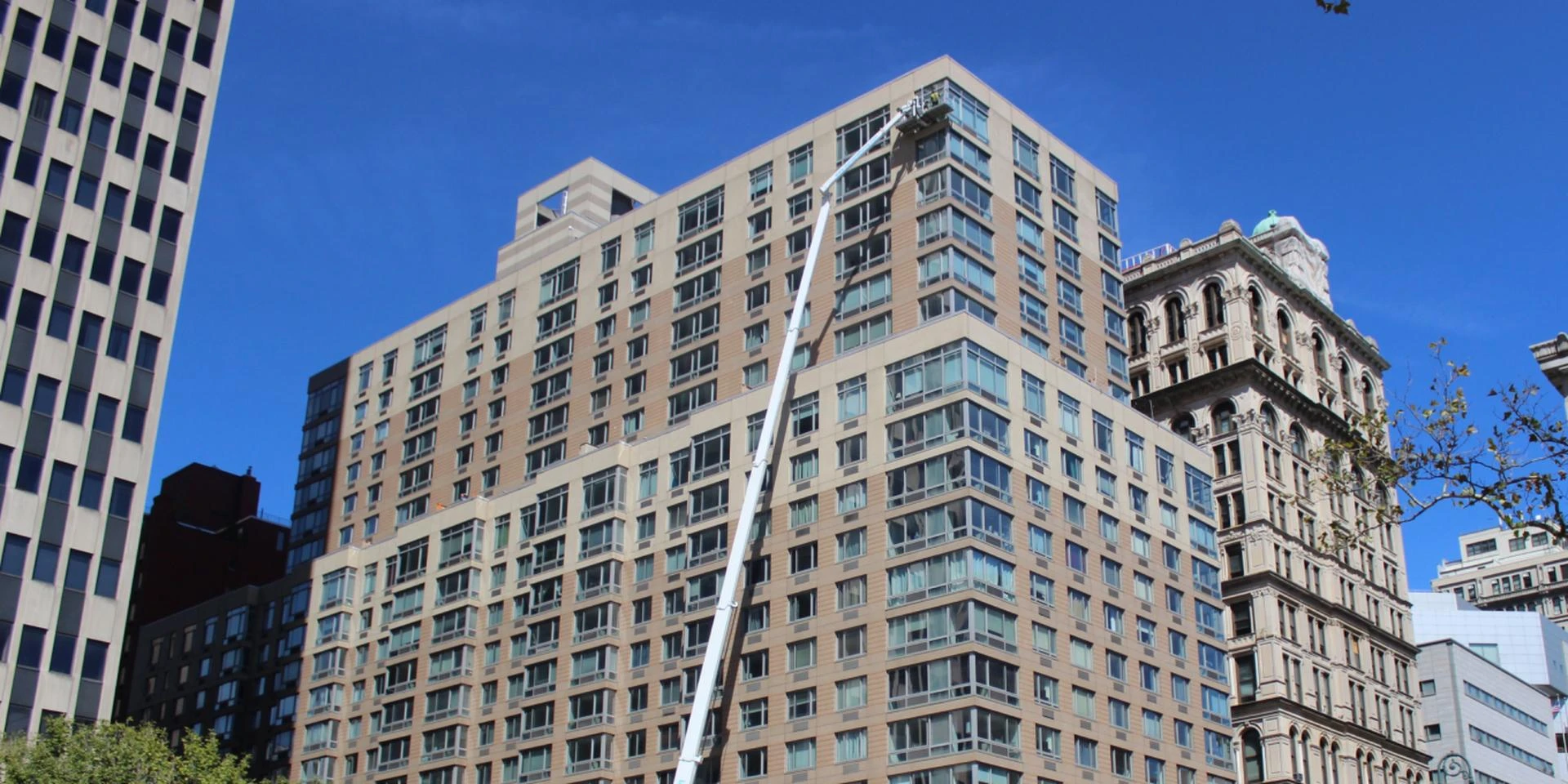
Yes. Inspectors on our jobs do their close-up work from the 12 ft basket, moving drop to drop without rigging a scaffold. The QEWI decides the method and files the report.
From the NYC Department of Buildings FISP schedule and rules (1 RCNY 103-04). Check your filing status on DOB NOW before you plan the work.