Telescopic vs articulating at a glance
| Feature | Telescopic (straight) boom | Articulating (knuckle) boom |
|---|---|---|
| How it moves | One straight arm extends in sections and swings on the turntable. | Two or more arm sections hinged at joints; many models also extend. |
| Height and reach | The most height and horizontal outreach in its class. | Less outreach for the same size, more control near the work. |
| Obstacles | Needs a clear line from the machine to the work. | Goes up and over walls, roofs, parapets and machinery. |
| Tight spaces | The straight arm swings wide. | Compact; works close to the machine and in narrow areas. |
| Positioning | Fast to cover long distances. | Fine placement of the basket around a structure. |
| Best for | Steel, tall facades and open sites where the path is clear. | Work behind or over something, indoors, on congested sites. |
What is a telescopic boom lift?
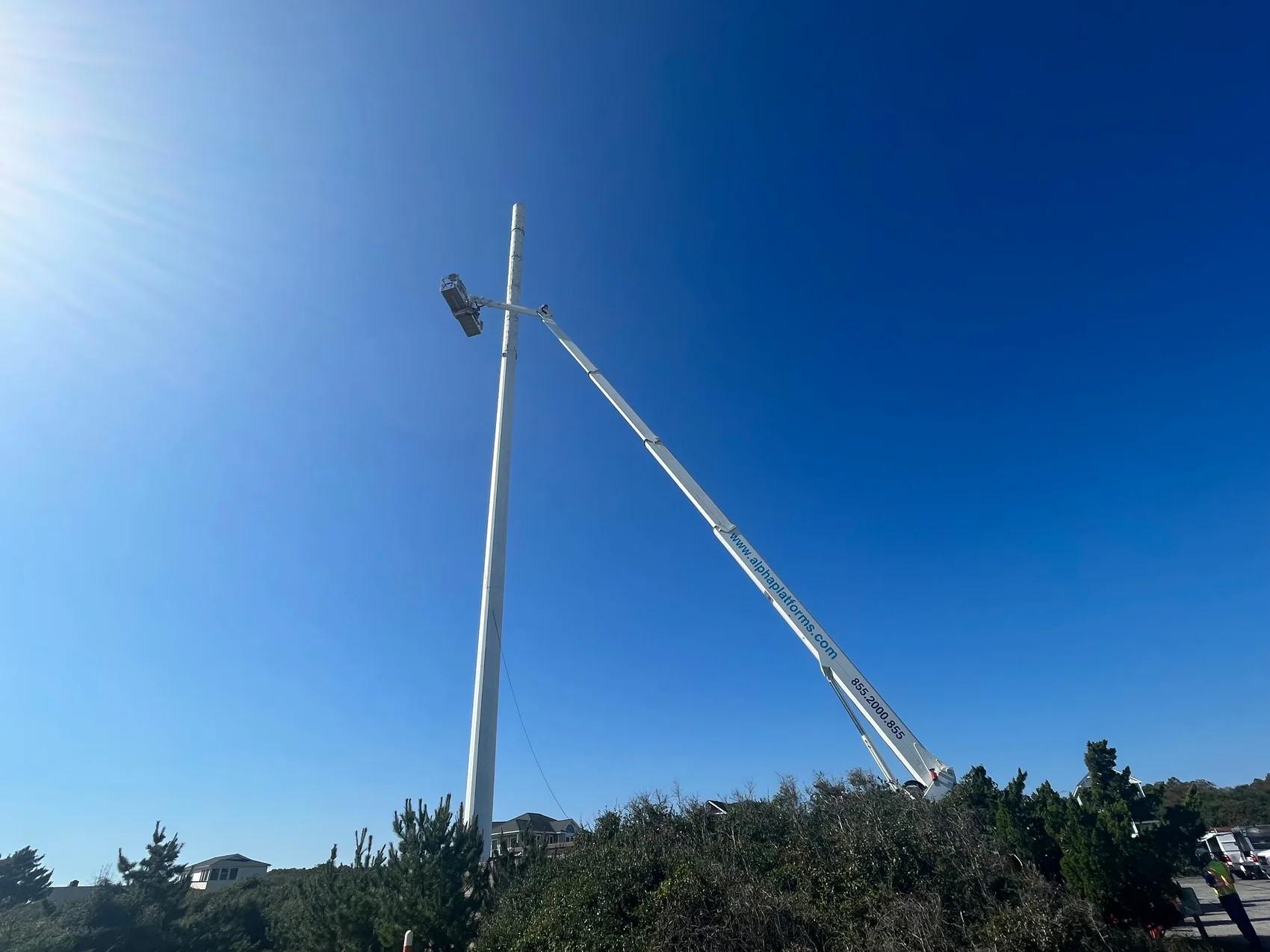
A telescopic, or straight, boom lift has one arm made of nested sections that slide out. Raising and extending the arm takes the basket high and far in a straight line, which makes it the choice for maximum height and outreach on open sites: structural steel, tall facades, large buildings with clear access. The trade-off is that the arm needs a clear path: anything between the machine and the work is in the way.
What is an articulating boom lift?
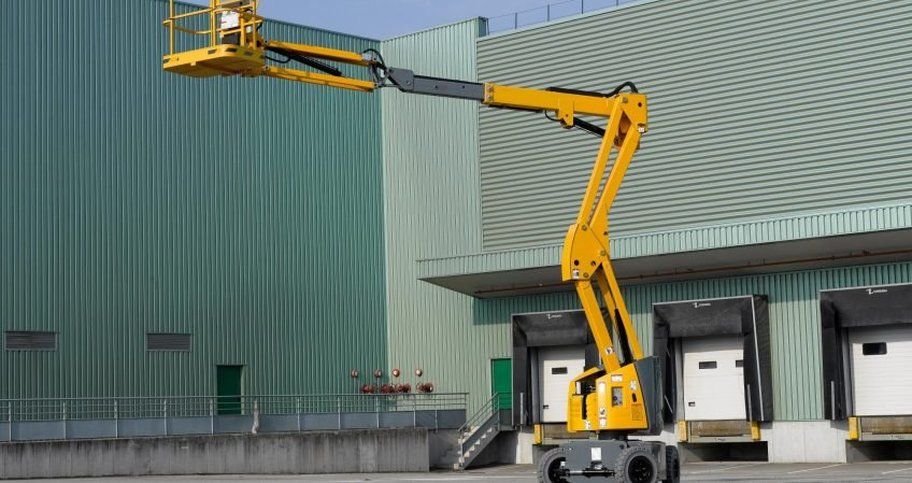
An articulating, or knuckle, boom lift has arm sections joined by hinges, so the arm can rise, bend and reach down or out on the other side of an obstacle. Many also have a short jib at the tip for fine positioning. That makes them the choice for work over walls, parapets, rooftop units and machinery, in tight urban spaces and indoors. For the same machine size, they usually do not reach as far as a straight boom.
Which one should you choose?
- Choose telescopic when the line from where the machine stands to the work is clear and you need the most height or outreach.
- Choose articulating when there is something in between: a lower roof, a canopy, a fence, trees, a dock or equipment.
- Look at the ground and space too: a telescopic boom needs room to swing; an articulating boom can work closer to the machine.
- Check the working envelope in the spec sheet for the height and distance you need. See how to pick the right lift size.
The hybrid: telescopic boom with an articulating jib
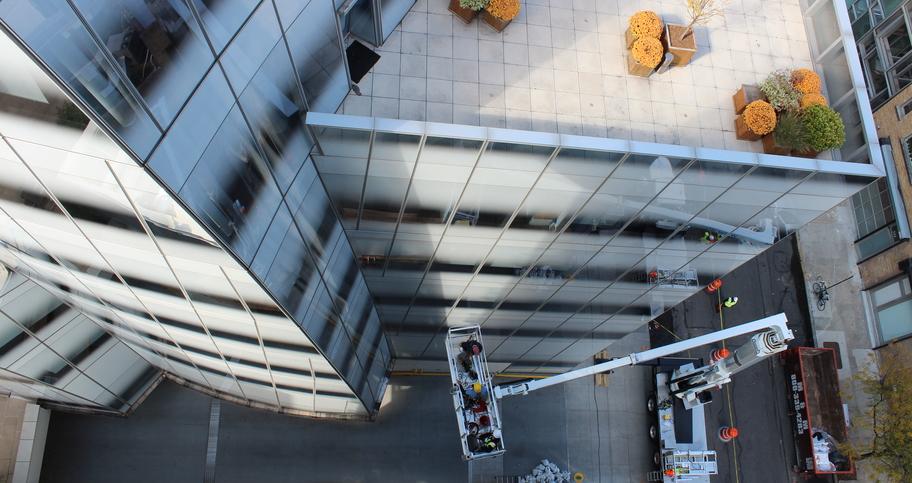
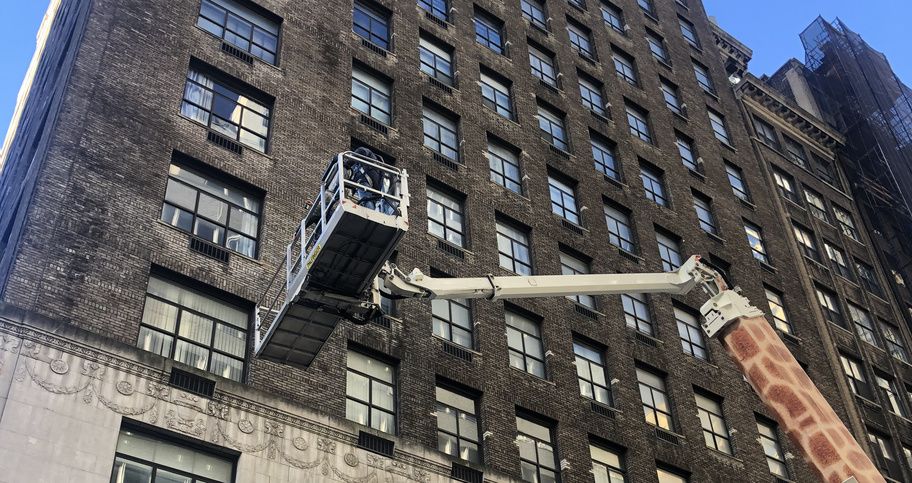
Large truck-mounted lifts do not make you choose. Our lifts combine a long telescopic main boom for height and reach with an articulating jib, or upper boom, at the end that bends over obstacles, and a basket that rotates on the jib:
- Jibs from 31'6" to 49'2", and a 60 ft upper boom on the A‑250.
- Basket rotation up to 2 × 200° on some models, to work around corners and columns.
- Up and over: over roofs, sheds and lower buildings to the wall behind them. Some models also reach below ground level, "under, up, over and back".
- Height and reach together: 150 to 300 ft of working height and up to 135 ft of side reach across the fleet.
On the Governor Mario M. Cuomo Bridge, inspectors had been checking the stay cables from a scaffold basket hung on the cables: about one drop a day, one to two months in all, and wind kept shutting the work down. Our A‑230 drove onto the deck, and the operator moved two inspectors up, down and along the cables, turning the basket around them. Three setups per side covered the cabled span in three days.
Other boom lift types
Booms also differ by how they move and what they run on: self-propelled (electric or diesel), towable (on a trailer hitch), tracked spider lifts, and truck-mounted. See types of aerial work platforms and boom lift vs scissor lift. To see what reaches your work, try the reach calculator or compare the fleet.
Quick answers
What is the difference between a telescopic and an articulating boom lift?
A telescopic boom has one straight arm that extends in sections, for the most height and outreach. An articulating boom bends at one or more joints, so it reaches up and over obstacles and works in tight spaces.
Which reaches higher, telescopic or articulating?
For the same machine class, telescopic booms usually reach higher and farther. Articulating booms trade some outreach for the ability to work over and around obstacles.
When should I use an articulating boom lift?
When something sits between the machine and the work: a wall, a roof, a canopy, trees or machinery, or when the space around the machine is tight.
What is a jib on a boom lift?
A short extra arm at the tip of the boom that bends independently, for fine positioning of the basket and reaching over obstacles. On our truck-mounted lifts the jib is 31'6" to 49'2" long.
Are truck-mounted boom lifts telescopic or articulating?
Ours are both: a telescopic main boom for height and reach with an articulating jib at the end and a rotating basket.