The 8 mistakes
1. Sizing by height alone. A lift that reaches the height may not reach the work. Measure the horizontal distance from where the lift can park to the farthest point, note anything in between, and check the working envelope. See how to pick the right lift size.
2. Guessing the load. People, tools, materials and the parts coming down all count. On one of our glass jobs, panels listed at 500 to 600 lb turned out to include an old one weighing 900 lb. If you are not sure of a weight, weigh it, and ask what the basket carries at the reach you need.
3. Forgetting the setup spot. Street width, slope, soft ground, overhead wires and the space for outriggers decide which machine fits. A lift that cannot set up on your site is no use to you.
4. No permit, no traffic plan. On a city street, the lift usually needs a permit and traffic control, and getting them takes time. Ask who handles it. See boom lift permits.
5. Comparing day rates instead of job cost. The cheaper machine that needs three setups, a second lift or an extra day often costs more. Compare the cost of finishing the work, including delivery, setup, fuel, operator and permits. See boom lift rental cost.
6. Booking too late. Large lifts, permits and night work need lead time. Book as soon as the scope is clear, and tell the rental company about deadlines up front.
7. An untrained operator. OSHA allows only trained, authorized operators. A crew that runs small booms is not automatically ready for a 250 ft truck-mounted lift. Rent with an operator, or confirm training on that type of machine. See IPAF training.
8. Ignoring the weather. Every lift has a wind limit, and lightning stops work. Plan heavy or wind-catching loads for calm hours and have a backup day. See working at height in wind.
Questions to ask a boom lift rental company
- Which lift do you recommend for my height, distance and load, and can I see its working envelope?
- What is included: delivery, setup, fuel, operator, permits, traffic control, insurance?
- How is it billed: per day, per shift, minimum hours? What happens if weather stops work?
- Who operates it, and what training do they have?
- When was the lift last inspected, and what does the daily check cover?
- How fast can it set up, and can it move between sites the same day?
- What attachments are available for heavy items, and what does the basket carry?
- Can I see similar jobs you have done, and reviews from clients?
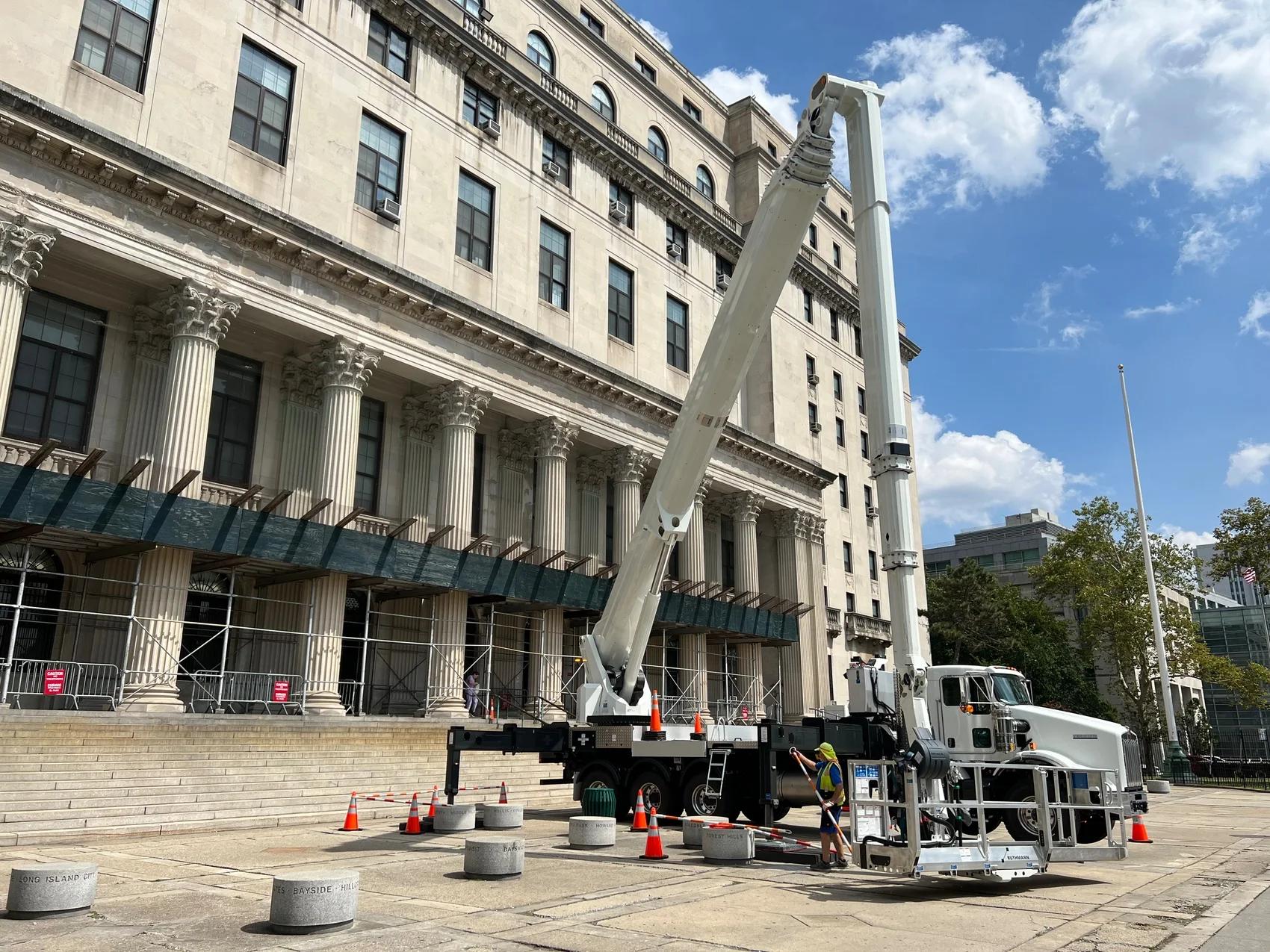
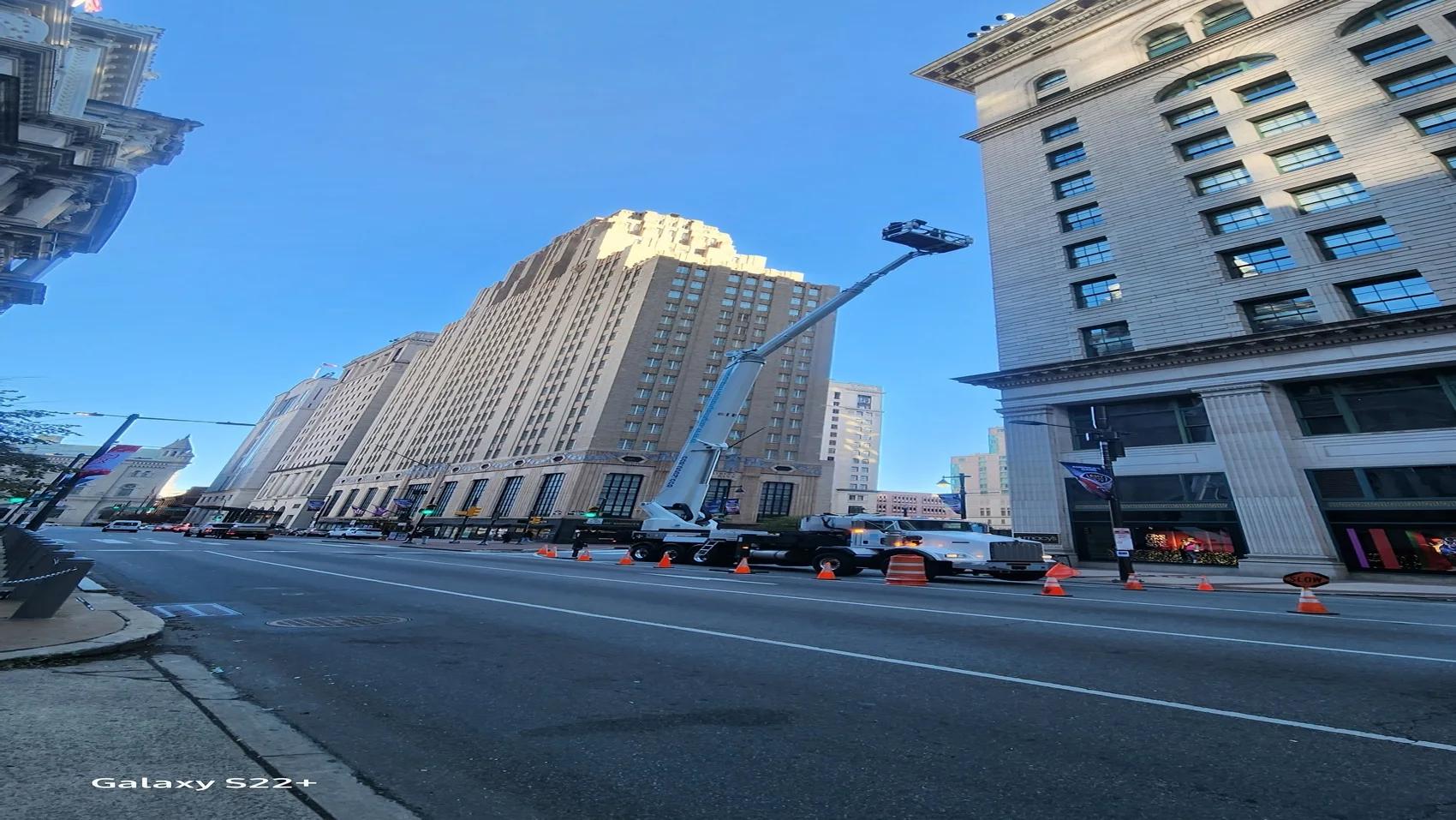
On the John Wanamaker building across from Philadelphia City Hall, the inspector's 150 ft lift could not reach parts of all four sides, and a taller lift meant closing four downtown streets. Our A‑250 came with permits, street closures and traffic management included, set up in 10 minutes, and all four sides were inspected in one day.
Rent or buy a boom lift?
| Factor | Buying | Renting |
|---|---|---|
| Use | Pays off when the same machine works most days of the year. | Fits jobs that come and go, and different heights from job to job. |
| Right size | You are tied to the machine you bought. | Each job gets the lift it needs, from 150 to 300 ft. |
| Inspections | The owner keeps up with daily, frequent and annual inspections and ANSI compliance. | The rental company maintains and inspects the fleet. |
| Storage and transport | You need a yard, a driver and permits to move it. | The lift shows up for the job and leaves when it is done. |
| Operators | You train, certify and schedule your own. | Rent with an operator who knows the machine. |
| Downtime and value | Repairs stop your work; the machine loses value every year. | A breakdown is the rental company's problem to solve. |
For the tallest lifts, the answer is usually to rent: a 250 or 300 ft truck-mounted lift is a large investment for work that comes a few times a year. In Times Square, the lighting board that maintains the area's LED screens had its own 130 ft bucket truck, but it could not reach the top of the 250 ft American Eagle tower. The job was planned for two nights. Our A‑250 covered the whole tower from one spot, with the city permit and flaggers, and the work was finished in one night.
Boom lift rental checklist
- Height, horizontal distance and obstacles measured; working envelope checked.
- Load weighed: people, tools, materials and what comes down.
- Setup spot checked: width, slope, ground, wires.
- Permit and traffic control: who handles them and how long they take.
- Quotes compared for the whole job, with inclusions spelled out.
- Operator: rented with the lift, or your own, trained on that machine.
- Inspection records and daily check confirmed.
- Weather plan and a backup day.
Send us the address and what you need to reach, and we will recommend the lift and tell you what is included. See boom lift rental with an operator, bare rental and what clients say in our reviews.
Quick answers
What should I know before renting a boom lift?
The working height, the horizontal distance from where the lift can park to the work, the load, the ground and space at the setup spot, whether you need a street permit, and who will operate it.
Is it better to rent or buy a boom lift?
Buying pays off only when the same machine works most days of the year. For different heights from job to job, and especially for large truck-mounted lifts, renting is usually cheaper once inspections, storage, transport, operators and downtime are counted.
What is usually included in a boom lift rental?
It varies. Ask about delivery, setup, fuel, operator, permits, traffic control and insurance. With our operated rentals, the operator, permits and traffic control are included.
How far ahead should I book a boom lift?
As soon as the scope is clear. Large lifts, street permits and night work need lead time; tell the rental company your deadline up front.
Do I need my own operator to rent a boom lift?
Not with an operated rental: the rental company's operator runs the lift. For a bare rental, your operator must be trained and authorized for that type of machine.