18 tips at a glance
- Use only inspected, maintained equipment.
- Test the controls before every shift.
- Check the ground, slope and overhead space before setup.
- Set up level, brakes on, outriggers on pads.
- Agree on how the crew and operator communicate.
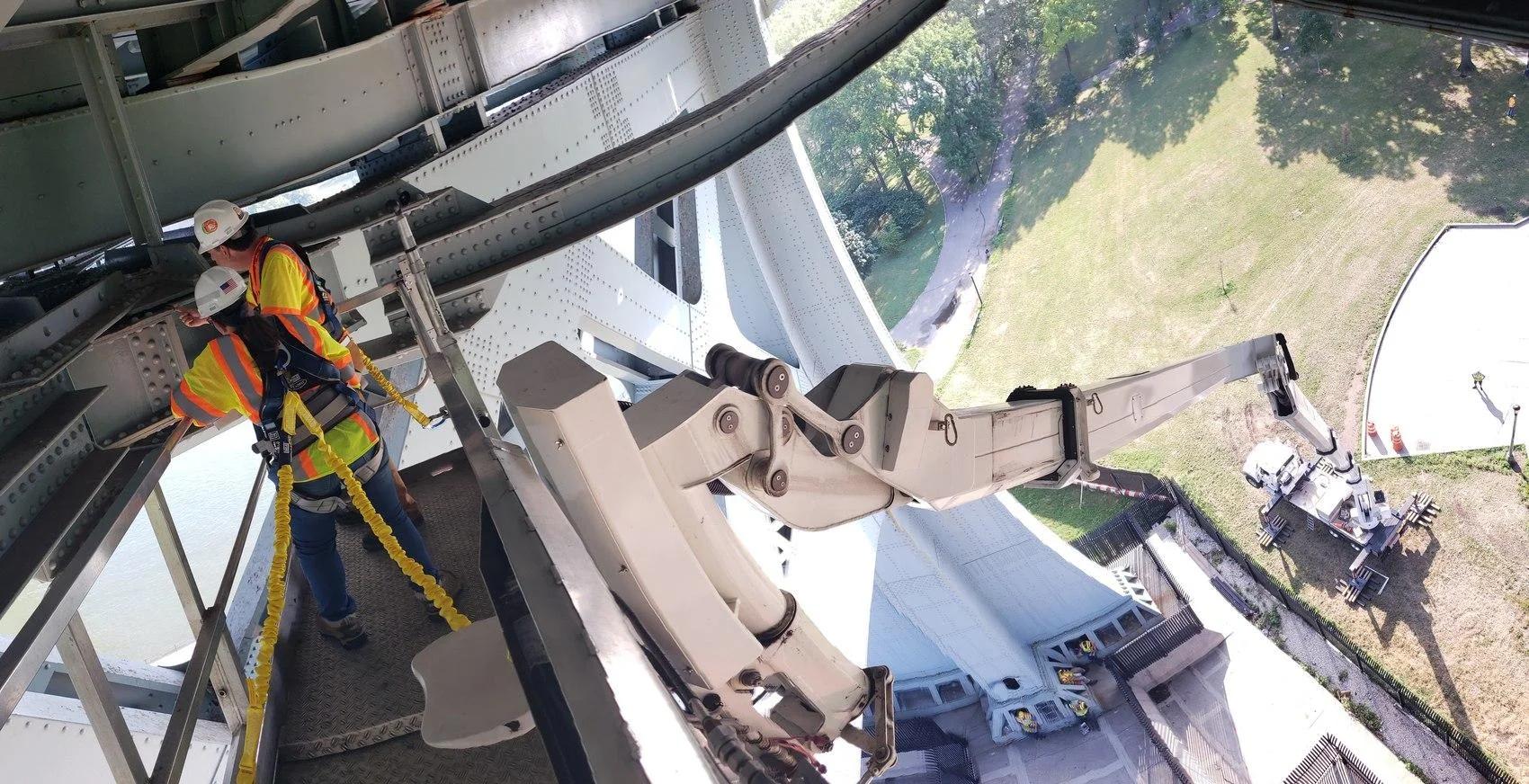
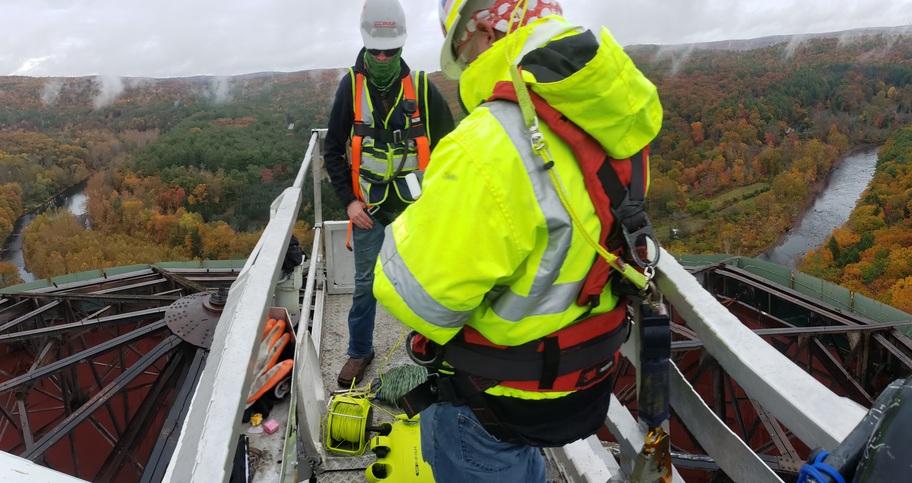
- Wear a full body harness and clip it to the basket.
- Keep both feet on the basket floor.
- No ladders, planks or scaffolding in the basket.
- Do not lean over or climb on the rails.
- Keep the gate closed and never leave the basket at height.
- Hold the rail while the basket moves.
- Stay within the rated load.
- Count everything that goes into the basket.
- Tether tools and keep loads inside the rails.
- Stay at least 10 ft from power lines.
- Respect the wind limit and stop for lightning.
- Watch for crushing and collision hazards.
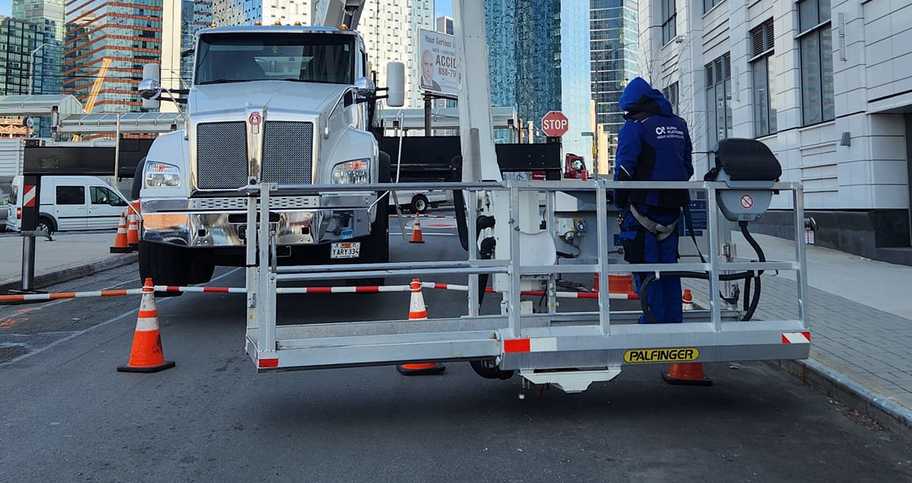
- Keep the area under the basket clear.
Before you go up (tips 1 to 5)
1. Use only inspected, maintained equipment. Walk around the lift before you use it: hoses and fittings without leaks, tires, outriggers and pads, guardrails, gate, harness anchor points, decals and the manual in its holder. If anything looks damaged or works differently than usual, do not use the lift and tell the owner or rental company.
2. Test the controls before every shift. OSHA 1926.453 requires the lift controls to be tested each day before use, and only authorized persons may operate an aerial lift. Test from the ground controls first, then from the basket, including the emergency stop and the emergency lowering.
3. Check the ground and the space above. Look for soft ground, slopes, curbs, manholes, vaults and basements under the outriggers, and for wires, trees, signs and balconies in the boom's path. On a city street, a permit and a plan for traffic and pedestrians come first: see boom lift permits.
4. Set up level. Brakes set, outriggers on pads, the machine level within the manufacturer's limits. Our lifts keep the boom functions locked until they are fully set up and level.
5. Agree on how you communicate. The crew in the basket and the operator work as one team. Settle on hand signals or radios before the first move, and decide who gives the stop signal. Anyone can call a stop.
How to operate a boom lift, step by step
Every model has its own controls, so the manufacturer's manual for that exact lift comes first. The basic sequence is the same on almost all of them:
- Walk-around inspection of the machine and the work area (tips 1 and 3).
- Start at the ground controls. Select ground control, start the machine and run each function once: lift, swing, telescope, jib, basket rotation. Check the emergency stop and the emergency lowering.
- Switch to the platform controls, put on the harness and clip it to an anchor point in the basket before the basket leaves the ground.
- Enable the controls. Most baskets have a foot switch or enable button: hold it, then move the joystick. Releasing it stops the move.
- Move one function at a time, slowly, looking in the direction of travel. Plan the order of moves in tight spaces so you can come back out the same way.
- Position close to the work, so nobody has to lean or reach over the rail.
- Shut down: bring the basket back, stow the boom in its rest, lower the basket to the ground and step out. Then retract the outriggers and switch off.
On our rentals, our certified operator runs this sequence, and your crew just works from the basket. See boom lift rental with an operator.
In the basket (tips 6 to 14)
6. Harness on, clipped to the basket. OSHA 1926.453 requires a lanyard attached to the boom or basket, never to a nearby pole or structure. Use a full body harness and one lanyard per anchor point. More in 4 types of fall protection systems.
7. Both feet on the floor. OSHA requires workers to stand firmly on the floor of the basket. Non-slip boots help; in winter, water on the floor turns to ice.
8. No ladders, planks or scaffolding in the basket. OSHA does not allow them as a work position. If you need more height, you need a taller lift. Our lifts reach from 150 to 300 ft.
9. Do not lean over or climb on the rails. A harness does not stop you from tipping over the rail. If you cannot reach, ask the operator to move the basket.
10. Gate closed, nobody steps out at height. The basket is the work position. Stepping out onto a roof, a ledge or a tower at height needs its own fall protection plan, agreed before the job.
11. Hold the rail while the basket moves. Starts and stops are where people lose their balance.
12. Stay within the rated load. The rated load is on the basket decal and in the manual. An overloaded lift can tip or lock out. On a glass job in New York, the new panels were listed at 500 to 600 lb, but an old panel came out weighing 900 lb. The lift's monitor locked the boom, our crew lowered the glaziers and the panel safely with the emergency descent, and a second lift finished the job.
13. Count everything that goes into the basket. People, tools, materials, the parts you take down and anything mounted on the basket all count toward the limit. If you are not sure what something weighs, weigh it.
14. Tether tools, keep loads inside the rails. Tools on lanyards, small parts in bags, nothing hanging by its cord. Heavy items go up on an attachment made for the purpose, not in someone's arms over the rail: see boom lift accessories.
Around the lift (tips 15 to 18)
15. At least 10 ft from power lines. OSHA lists electrocution, falls and tip-overs as the main causes of aerial lift deaths. Keep the lift and everything in the basket at least 10 ft from lines up to 50 kV, more for higher voltages, and treat every line as live.
16. Respect the wind limit, stop for lightning. Each lift has a maximum wind speed in its manual; ours carry a wind meter in the basket. Bring the basket down at the first rumble of thunder. See working at height when it's windy and working in the rain.
17. Watch for crushing and collision hazards. Look overhead and to the sides before every move, keep hands and arms inside the rails, wear a hard hat. Getting pinned between the basket and a beam, a cornice or a balcony is a known aerial lift hazard.
18. Keep the area under the basket clear. Cone off the footprint and the drop zone below the basket. A phone dropped from 300 ft is dangerous. In the street, flaggers keep people and cars out of the zone.
Inspections and maintenance
A lift is only as safe as its last inspection. There are three levels:
| Inspection | When | Who |
|---|---|---|
| Pre-use check | Before every shift. OSHA requires the controls to be tested each day. | The operator |
| Frequent inspection | For mobile elevating work platforms under ANSI A92.22: every 3 months or 150 hours, whichever comes first, and after 3 months out of service. | A mechanic qualified on that type of lift |
| Annual inspection | No later than 13 months after the last one (ANSI A92.22). | A person qualified on that make and model |
Truck-mounted aerial devices follow their own ANSI standard (A92.2) and the manufacturer's schedule, so check the manual for your model. Keep the records. If you rent, ask the rental company when the lift was last inspected and what the daily check covers.
Report anything unusual found in the daily check, such as a weeping hose, a control that responds late or a worn pad, and fix it before the next shift. For the daily check itself, use our free aerial lift pre-use inspection checklist (printable PDF).
Who can operate a boom lift?
OSHA allows only authorized persons to operate an aerial lift, and the employer must train them on the hazards and the machine. The ANSI standards call for training on the type of lift and familiarization with the exact model. The IPAF PAL card is widely recognized proof of that training: category 1b covers static booms, which includes truck-mounted lifts like ours. We are an official IPAF training center: see IPAF training.
Our own operators are certified and run the lift for your crew on every operated rental. See our operators and how our lifts keep crews safe.
Quick answers
How do you operate a boom lift?
Inspect the lift and the area, set it up level on outriggers, test every function from the ground controls, switch to the platform controls, clip your harness to the basket, then hold the enable switch and move one function at a time, slowly, watching where you go. Always follow the manual for your model.
Do you need a harness in a boom lift?
Yes. OSHA 1926.453 requires a lanyard attached to the boom or basket. Wear a full body harness and clip it before the basket leaves the ground.
How far should a boom lift stay from power lines?
At least 10 ft from lines up to 50 kV, more for higher voltages. Treat every line as live.
How often does a boom lift need to be inspected?
Before every shift by the operator. Under ANSI A92.22, mobile elevating work platforms also need a frequent inspection every 3 months or 150 hours and an annual inspection no later than 13 months after the last one. Truck-mounted lifts follow ANSI A92.2 and the manufacturer's schedule.
Who is allowed to operate a boom lift?
Only authorized, trained persons. The employer trains them on the type of lift and the exact model. An IPAF PAL card category 1b covers static booms, including truck-mounted lifts.
What happens if you overload a boom lift?
It can tip or lock out. Our lifts monitor the load and lock the boom when the basket is over its limit; the crew is then brought down with the emergency descent.