Height access equipment compared
| Method | Typical reach | Setup | Best for |
|---|---|---|---|
| Ladder | Low work, a few rungs below the top. | Minutes | Short, light jobs where you can keep three points of contact. |
| Scaffold tower | Low to mid-rise. | Hours | Indoor or small outdoor jobs on level ground. |
| Supported scaffolding | Any height it is designed for. | Days to weeks, plus permits | Long jobs covering a whole facade. |
| Swing stage | Full building height from the roof. | A day or more of rigging | Long vertical drops on tall buildings with roof anchors. |
| Rope access | Full building height. | Hours of rigging | Light inspection and repair where nothing else reaches. |
| Crane basket | As high as the crane. | Crane setup and lift plan | Only when conventional means are more hazardous or not possible. |
| Scissor lift | Usually up to about 60 ft. | Minutes | Overhead work on flat floors. |
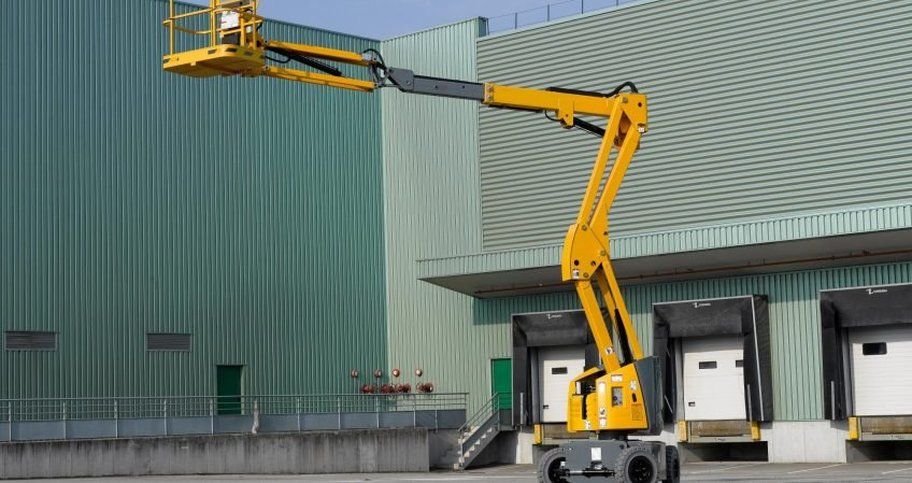
| Self-propelled boom lift | Up to about 185 ft. | Delivery by trailer, then minutes | Construction sites with firm, level ground. |
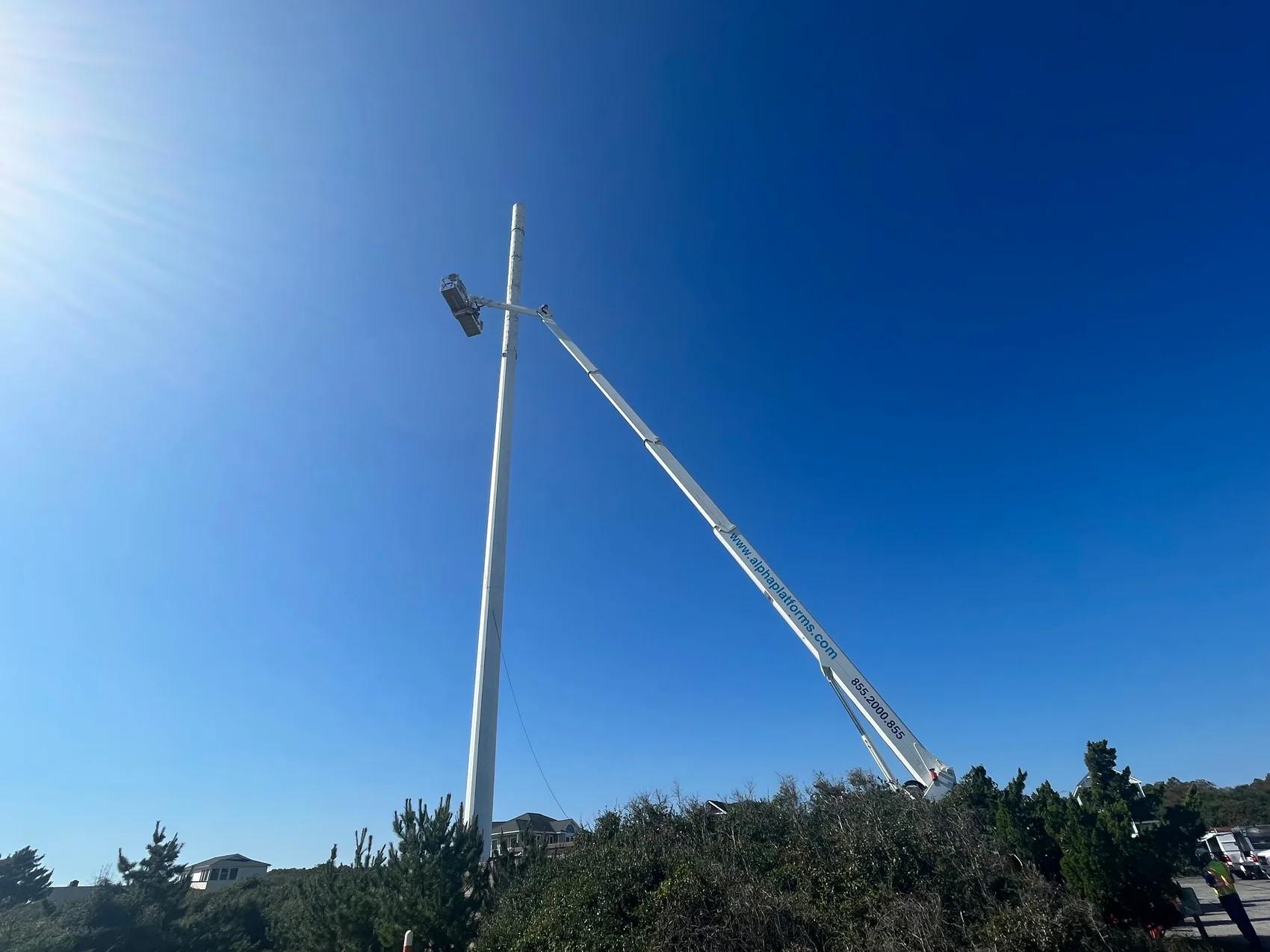
| Truck-mounted boom lift | 150 to 300 ft in our fleet. | About 15 minutes on outriggers | Tall work from the street, up and over obstacles, moving between sites. |
Ladders
A ladder is for getting up to the work and doing a short, light job. OSHA 1926.1053 requires the side rails of a portable ladder to extend at least 3 ft above the landing, and a leaning ladder is set about one foot out for every four feet of length. If the job means working with both hands for a long time, handling heavy tools or materials, or reaching out to the side, you need a platform instead. See fall protection systems.
Scaffolding and scaffold towers
Scaffolding gives a large, stable work deck and stays in place for the whole job, which makes it a good fit for long projects on one facade. The trade-off is time and space: it is designed, delivered and erected under the supervision of a competent person before work starts, it often needs permits, and it stays on the sidewalk until it comes down. OSHA requires fall protection for anyone on a scaffold more than 10 ft above a lower level. Scaffold towers are the mobile, smaller version for indoor and low work.
Swing stages and rope access
Suspended platforms (swing stages) and rope access hang from the roof. They reach the full height of a building and suit long vertical runs, but they need roof anchors, rigging time and good weather, and they cannot reach a wall behind a lower roof. On a two-point swing stage, OSHA requires both a guardrail and a personal fall arrest system for each worker; rope descent is limited to 300 ft above grade unless no other way is feasible.
See boom lift vs swing stage and boom lift vs rope access.
Crane baskets
A crane can lift a personnel basket very high, but OSHA 1926.1431 allows hoisting people by crane only when conventional means, such as an aerial lift, scaffold or ladder, would be more hazardous or are not possible. The basket hangs on a cable, so it can swing and turn in the wind. See boom lift vs crane man basket.
Aerial lifts
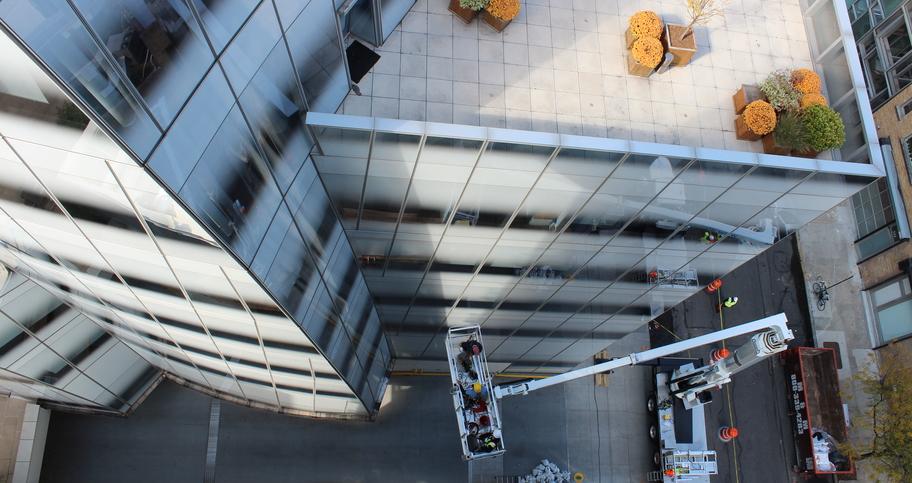
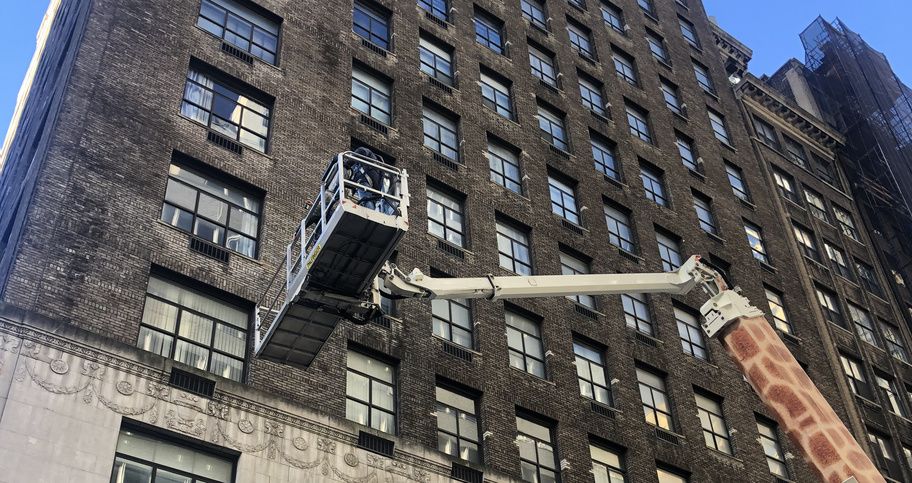
Aerial lifts put the crew in a railed platform that moves to the work. Scissor lifts go straight up over a flat floor; boom lifts reach up, out and over obstacles. Self-propelled booms suit construction sites; truck-mounted booms drive to the job, set up on outriggers in minutes and reach the highest of all. See boom lift vs scissor lift and types of aerial work platforms.
When the Washington National Cathedral needed its earthquake-damaged pillars inspected, scaffolding meant drilling into old stone and rope access risked damaging the carvings. Our A‑230 was ready within ten minutes of arrival and took two inspectors all the way around the pillars from one setup, without touching the building. The work was done before lunch on day two.
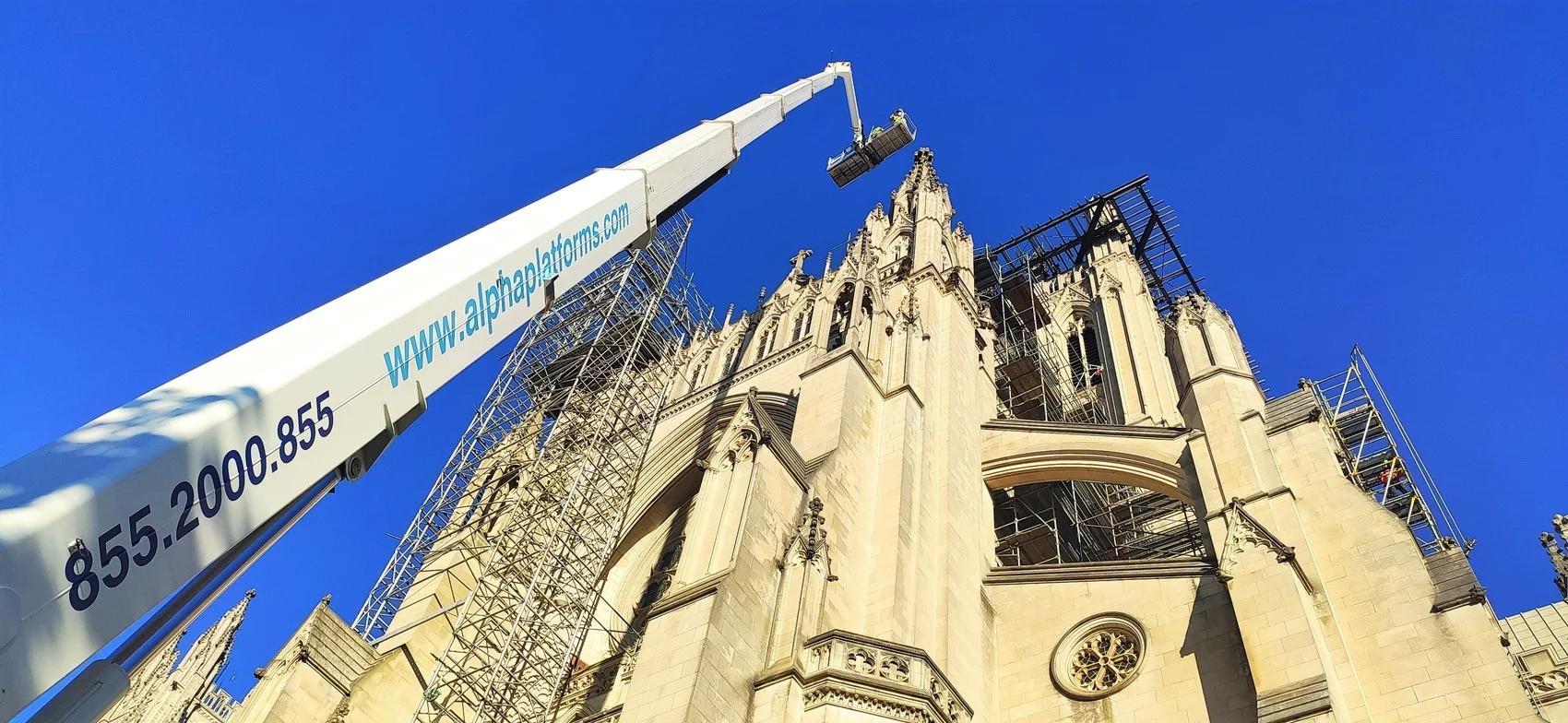
How to choose height access equipment
- Height and distance. Measure the highest point and how far it is from where equipment can stand. Try the reach calculator.
- What is in the way. Lower roofs, canopies, docks, trees, a sidewalk shed or traffic decide whether you need up-and-over reach.
- Duration. Hours or days favor a lift; months on one wall can favor scaffolding or a mast climber. Compare the cost of the whole job, including setup, permits and takedown: see the sidewalk shed vs lift calculator.
- Load. People, tools and materials together, and whether heavy parts need a hoist.
- Ground and street. Slope, soft ground, sidewalk width, permits and traffic control.
- The building. Historic stone, glass and fragile surfaces favor methods that do not touch or anchor to the building.
- People. Who is trained to rig, erect or operate it, and who rescues a worker if something goes wrong.
If your work is 150 to 300 ft up, or behind something a ladder, scaffold or swing stage cannot get past, see boom lift rental with an operator.
Quick answers
What is height access equipment?
Any equipment that gets people safely to work at height: ladders, scaffolding and scaffold towers, swing stages, rope access, crane baskets, and aerial lifts such as scissor and boom lifts.
What is the safest way to work at height?
Usually a railed platform that is brought to the work, such as an aerial lift or scaffold, rather than a ladder or rope. The safest choice for a given job depends on height, duration, ground and what is in the way.
When is scaffolding better than a lift?
For long projects that cover a whole facade for weeks or months, where a fixed deck and materials staging pay off. For short jobs, high work or work behind obstacles, a lift is usually faster and cheaper overall.
Can you use a crane basket instead of a lift?
Only when conventional means such as an aerial lift, scaffold or ladder would be more hazardous or are not possible, under OSHA 1926.1431.
How high can height access equipment reach?
Scissor lifts usually up to about 60 ft, self-propelled boom lifts up to about 185 ft, and truck-mounted boom lifts higher: our fleet reaches 150 to 300 ft.